Resource Guarding: Why Your Dog Growls Over Valued Things — and What It Really Means
That growl over a bone isn’t dominance or a “bad dog” — it’s one of the most natural behaviors in canine psychology. Here’s the science behind why resource guarding develops, how to spot it early, and the myths that make it worse.
Your dog is happily chewing a bone. You walk past, reach down to take it — and get a freeze, a stiffening body, a hard stare, maybe a growl. Maybe, one day, teeth. If your first thought is “he’s trying to dominate me” or “he thinks he’s the boss,” this article is for you — because resource guarding is one of the most misunderstood behaviors in dog ownership, and the misunderstanding is what usually makes it dangerous.
What resource guarding actually is
Resource guarding is a dog using behavior to control access to something they value — food, bones, toys, beds, spaces, even a favorite person. The dog’s internal logic is simple and ancient: valuable things are worth keeping, and keeping them works. In the wild, an animal that didn’t protect food, mates, territory, and safe resting spots didn’t survive long. Guarding is hardwired survival software — as natural as barking at a stranger or burying a bone. In fact, studies of free roaming and feral dogs show food related conflict and protection is a normal part of canine social life.
That naturalness matters, because it changes the whole conversation. A guarding dog is not broken, defiant, or trying to overthrow your household. They are running a program that evolution wrote, in an environment it wasn’t designed for: a human home, where hands — usually loving ones — keep approaching their valuables.
What counts as a “resource”? More than you think
Food bowls are the classic, but the list is long. Chews and bones. High value food items like stuffed toys and long lasting food puzzles. Stolen items — socks, wrappers, food off the counter, the garbage. Beds, couches, crates, and sleeping spots. Favorite toys. The car. A specific room or doorway. Warm spots in the sun. And the one that surprises people: you. Some dogs guard proximity to a preferred person — stiffening when another dog, another family member, or a guest approaches the person they’re sitting with. If your dog has ever positioned themselves between you and a newcomer and gone still, you’ve seen the earliest version of this.
How it shows up in real life
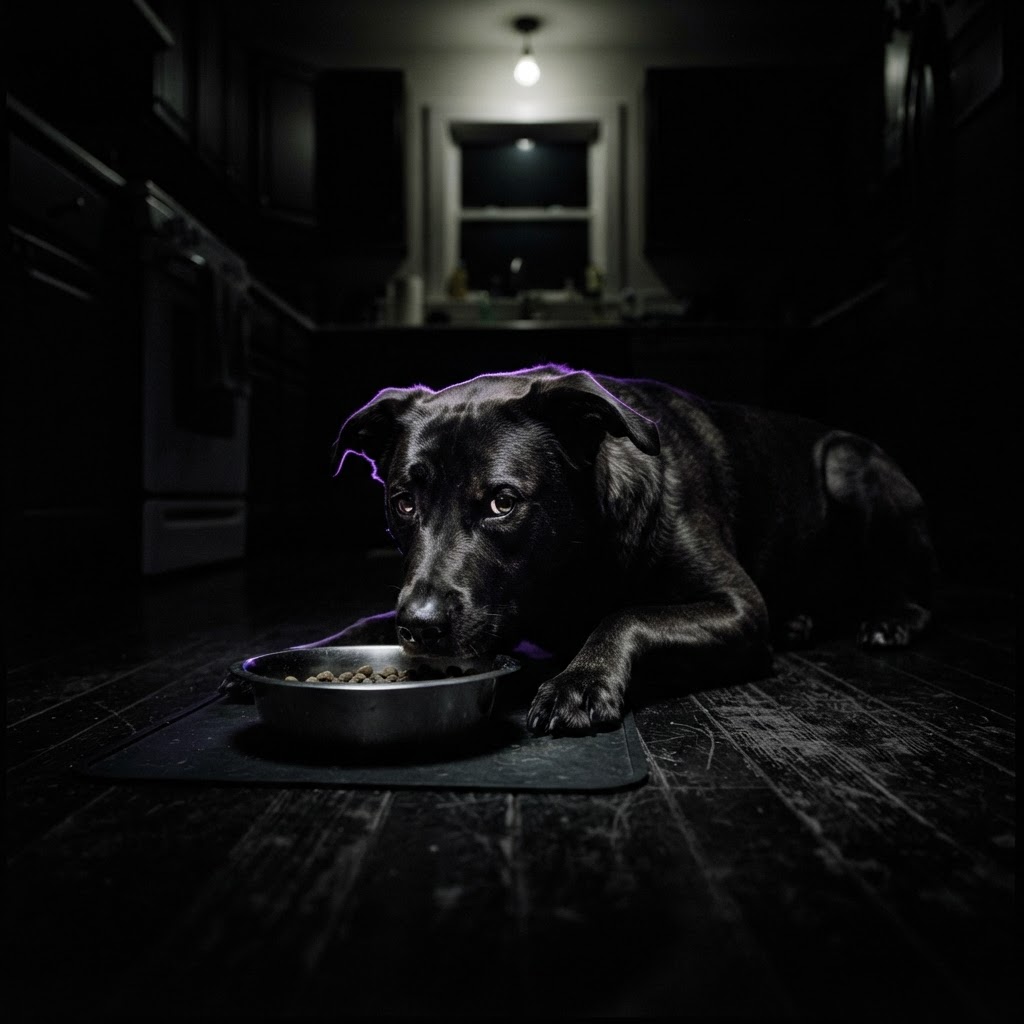
- Around the food bowl: eating faster when you approach, body hunching over the bowl, freezing mid chew, a sideways stare, a lip lift or growl when a hand comes close.
- With chews and stolen items: running away with the item, positioning it out of your reach, growling when you get close — or gulping the item instantly so nobody can take it.
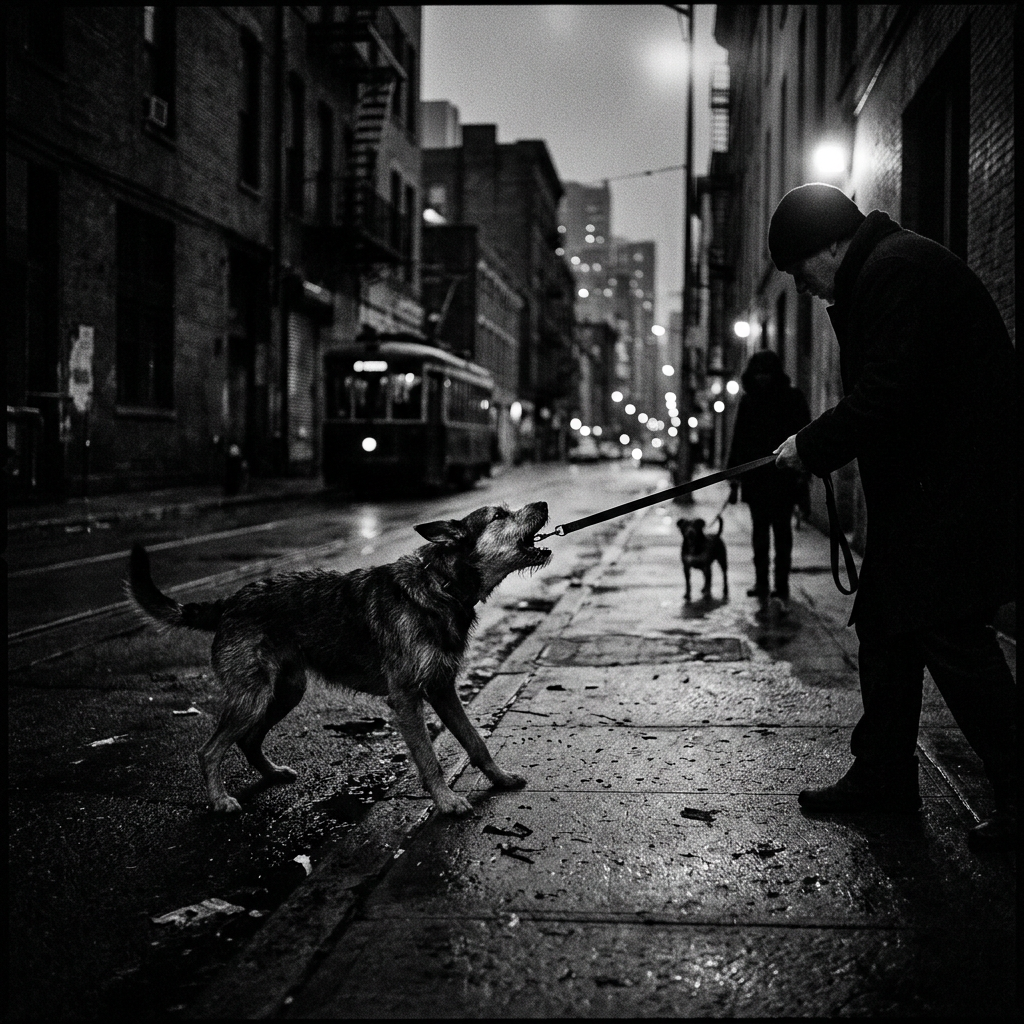
- On leash: leash frustration and reactivity can blend with guarding — a dog who feels trapped on leash is closer to their triggers, and some leash reactive dogs also guard their handler from approaching dogs and people.
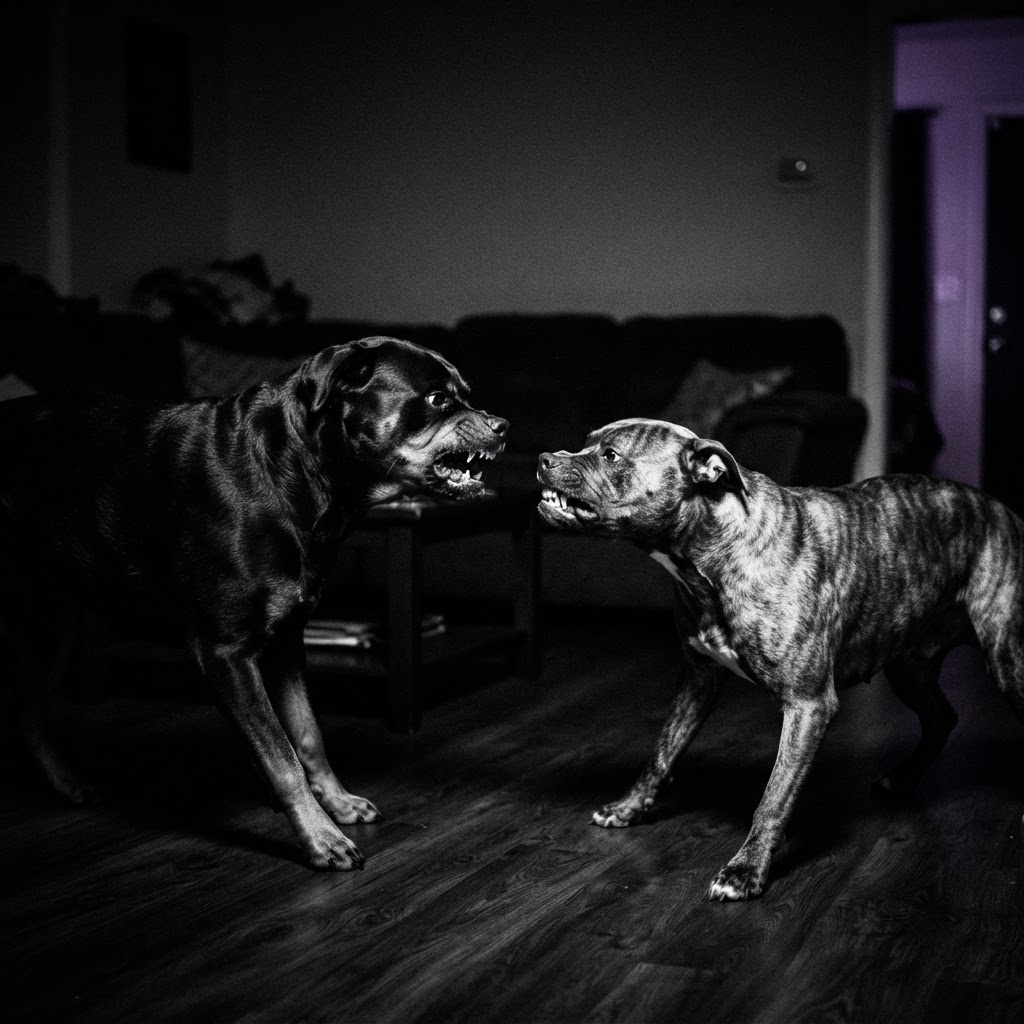
- Around other dogs: guarding food, toys, spaces, or your attention from a second dog in the home — often subtle: body blocking, head over shoulder positioning, standing over the resting dog, stiffening when the other dog approaches a valued spot.
- Around new people: a dog who hovers at a guest’s feet during dinner, or stiffens when a visitor reaches toward them while they’re on a favored bed.
- Around babies and toddlers: this is the highest stakes version. Babies crawl into dog spaces, grab food, toys, and the dog’s face. A dog who has never guarded an adult can guard against a child’s unpredictable approach — and a warning growl at a baby is not something to “correct”; it’s information you absolutely need.
Warning signs: the ladder before the bite
Aggression is rarely a switch — it’s a ladder. Dogs escalate in a sequence, and most bites come after the rungs below have been punished or ignored: tense stillness and freezing. Hard stare (“whale eye,” where the whites show). Eating faster. Body hunching over the item. Lip lift. Growl. Snap. Bite. Each rung is a request: “please don’t come closer.” Here’s the part every owner needs to understand: if you punish the growl — yell at it, alpha roll it, “correct” it — you don’t remove the dog’s discomfort. You remove the warning. A dog who learns that growling is forbidden doesn’t stop feeling the need to guard; they learn to skip the rungs and go straight to the bite. This is why “he just bit out of nowhere” is almost never the truth — the dog told everyone, and someone taught them it wasn’t safe to keep telling.
How it develops — rescue dogs, puppies, adults
Resource guarding develops through learning history, genetics, and environment — and it can begin anywhere.
Rescue and shelter dogs: many come from genuine scarcity. Street dogs compete for food; dogs in homes with multiple dogs, or in undersupplied shelters, learn that food appears and disappears and other mouths are faster. For a dog with that history, guarding isn’t a personality flaw — it’s a survival strategy that worked, in the world they used to live in. The behavior arrives with the dog; the new home just reveals it.
Puppies: some puppies guard from a very young age, and there’s a genetic component — certain lines are more inclined to claim and defend. But learning builds it too. Puppies who are repeatedly handled while eating — bowls lifted, hands in food, items swiped — can learn the opposite of the intended lesson: approaches predict loss. That’s the great irony of the old “put your hand in the bowl” advice. The intention was to teach tolerance; for many puppies, the actual lesson was that hands near food are bad news, which is the seed of guarding.
Adult dogs: guarding can appear in adulthood with no history — sometimes after a period of scarcity (a diet change, a boarding stay, competition with a new dog), sometimes as valued items become more valued with age, sometimes with an underlying medical problem. Pain, dental disease, GI discomfort, and cognitive decline in older dogs can all lower thresholds and raise defensiveness. This is why a sudden onset of guarding in an adult dog earns a vet visit before anything else.
Common myths, corrected
- Myth: “He’s trying to dominate me.” No — dominance framing was debunked decades ago. The dog isn’t climbing a social ladder; they’re protecting something valuable. The science of learning explains guarding completely, and it has nothing to do with status.
- Myth: “She guards because I never showed her who’s boss.” Guarding appears in the most obedient, well socialized dogs — and in puppies from excellent breeders. It’s not a product of spoiling or softness.
- Myth: “If I punish the growl, it stops.” It stops the growl, not the guarding — and takes away your warning system. Punishment based approaches to guarding are consistently associated with increased bite risk, which is why veterinary behavior specialists consistently advise against punishment for guarding behaviors.
- Myth: “Dogs that guard food are food aggressive forever.” Guarding is one of the most responsive behaviors to proper behavior modification when it’s handled correctly — but the handling is specialized work, which is why this article stops at education.
- Myth: “They’ll grow out of it.” Guarding typically escalates with rehearsal, not time. What’s a freeze today can be a growl in six months and a bite in two years if nothing changes.
Natural — and sometimes very serious
Both things are true at once. Guarding is normal canine behavior: mild, stable guarding over one bowl that never escalates is common and, managed sensibly, liveable for many families. But it’s also one of the most common reasons dogs bite their owners — and bites to hands and faces over valued items are the kind that end relationships, homes, and sometimes the dog’s life. Where it sits on that spectrum depends on the dog’s history, the intensity of the guarding, how long it’s been rehearsed, whether punishment has entered the picture, and who’s on the other end of it — an adult who can read a freeze, or a toddler who cannot.
If you recognized your dog in this article — the freeze, the fast eating, the growl over the bone — you’re not a bad owner, and your dog isn’t a bad dog. But you now have information most owners never get until after a bite. If you’d like to talk through what you’re seeing, your consultation is free — and resource guarding is exactly the kind of conversation worth having early.
Eloise Honey
Author — Noble Paws Academy
References & Further Reading
- 1.Overall, K. L. (2013). Manual of Clinical Behavioral Medicine for Dogs and Cats. Elsevier — resource guarding etiology, diagnosis, and behavior modification. ↗
- 2.McGreevy, P. D., et al. (2012). Dog behavior — risk factors for aggression around resources in a domestic dog population. Journal of Veterinary Behavior. ↗
Recognize Your Dog in This Article?
Reading is a great start — a personalized plan is the real fix. Your consultation is free and pressure-free.